Practical guide · Sampling
Why a physical customized sample matters before a bulk order
A rendering can confirm direction. Only a physical sample lets your team feel the material, check the dimensions and see how the actual customization behaves.
Use one approved reference
Before sampling, agree a product specification and artwork proof. The sample should be made to those details. If it differs, write down each change rather than relying on memory or a chat thread.
- Material, dimensions and construction
- Logo, colors and exact placement
- Contents, packaging and labeling
Handle it as your recipient would
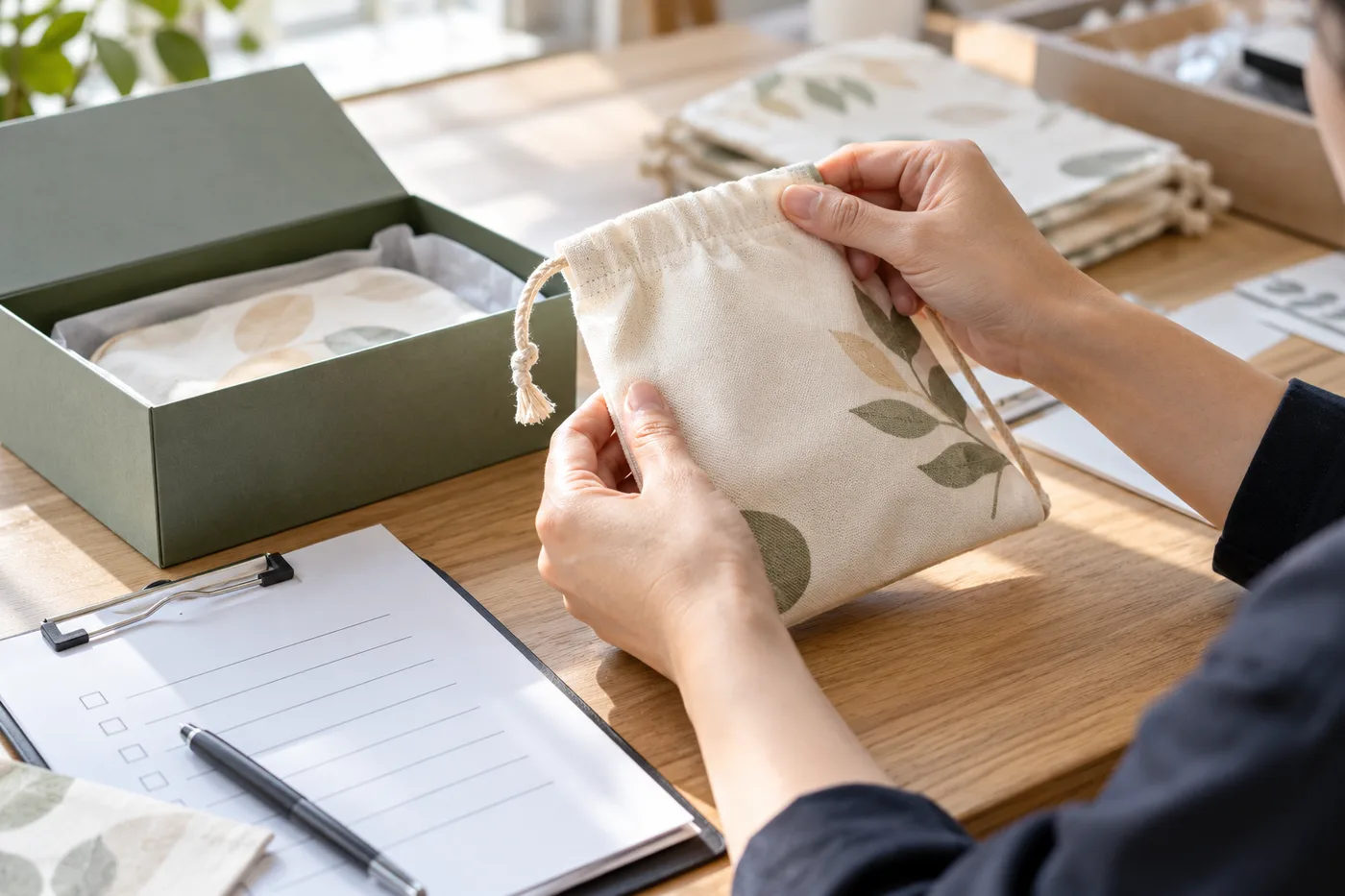
Open, carry, wear or use the sample in its intended setting. A pouch may look right in a photo but be awkward to open; a welcome box may be too large for clinic storage; a cabin accessory may not fit the service trolley.
- Check touch, seams, closure and edges.
- Compare dimensions with real storage or handover space.
- Ask intended users to try it when practical.
Record approval precisely
Photograph the approved sample and note any corrections. Specify whether a change needs a second sample. Keep an agreed version of the artwork and product details so production checks have an unambiguous target.
Then check the order against it
A sample is the standard for the next stage, not a guarantee that every unit will automatically match. During production, compare the order with the approved sample and the written specification, and resolve deviations before shipment.
MDA Trade offers a free customized sample for the client to hold and approve before a bulk order, then checks production against that approval.
Discuss a product brief ↗